

Cervical Disc Herniation
Expert care for Cervical Disc Herniation at Gentle Care Chiropractic in West Linn, Oregon.
Understanding Cervical Disc Herniation
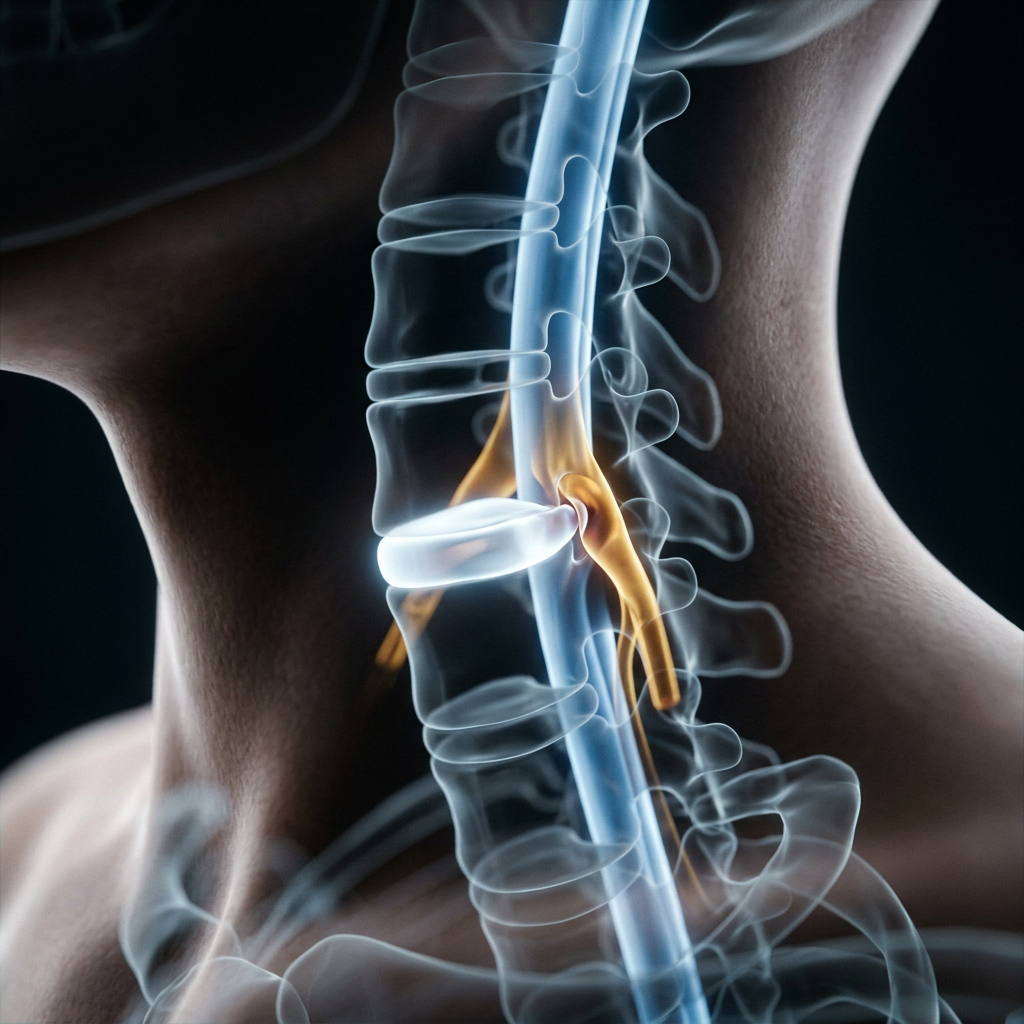
Also known as: Herniated Neck Disc, Cervical HNP, Bulging Disc in Neck A cervical disc herniation is the neck's equivalent of a lumbar disc herniation, but in a region where the anatomy is more compact and precision matters more. When the inner material of a disc in the neck pushes through its outer wall and contacts a nerve root — most commonly at C5-C6 or C6-C7 — that nerve sends pain into the shoulder, arm, and hand. The cervical spine houses structures close together: nerve roots, the spinal cord, and blood vessels are all in tight proximity. That's why we're deliberate with technique here — favoring gentle approaches and traction-based methods that decompress the nerve without aggravating it.
One useful clue to recognize: many patients with cervical disc herniation find relief by resting their hand on top of their head (what clinicians call Bakody's sign), because this position reduces tension on the affected nerve root. You may feel neck pain that radiates down one arm into the hand, with numbness or tingling following a specific pattern — often the thumb and index finger for C6, or the middle finger for C7. Weakness in specific arm movements can develop as compression continues. Symptoms typically worsen with looking down at a phone or computer, sitting for long drives, or sneezing.
Most cervical herniations develop gradually from disc degeneration, sustained forward-head posture, repetitive cervical flexion, and accumulated wear. Prior whiplash is a meaningful contributor. Heavy lifting with a twisted neck and contact sports are less common but important triggers. Age-related disc drying begins in the third decade of life — which is earlier than most people realize.
We use cervical traction (manual or mechanical) and motorized decompression as cornerstones — they open the foraminal space and take mechanical pressure off the nerve root. When a disc is acutely inflamed, we use gentler techniques — Activator instrument adjusting or gentle mobilization — rather than high-velocity rotation, advancing to more traditional cervical manipulation as the nerve calms. Thoracic adjustments relieve compensatory load on the neck. Nerve gliding exercises help the irritated nerve move more freely through its channel.
Deep neck flexor training and scapular strengthening stabilize the region for the long term. Class IV laser accelerates inflammation resolution. Most patients improve within six to twelve weeks. We refer for MRI and surgical consultation for progressive weakness or failed conservative care.
We may recommend: cervical/lumbar traction, spinal decompression, Activator, myofascial release, Class IV laser, corrective exercise, ergonomic coaching Seek immediate care if: You develop rapidly progressing arm or hand weakness, loss of coordination, trouble walking, or bowel/bladder changes — these may indicate cervical myelopathy or severe cord compression requiring urgent evaluation.
How We Can Help
At Gentle Care Chiropractic, we take a multi-disciplinary approach — addressing the root cause of your condition, not just the symptoms.
Chiropractic Adjustments
Precise spinal and joint corrections to restore alignment, relieve nerve pressure, and reduce pain — manual or instrument-assisted based on your needs.
Massage Therapy
Therapeutic massage releases muscle tension, improves circulation to injured tissue, and works synergistically with adjustments for faster recovery.
Physical Rehabilitation
Customized exercise programs strengthen supporting muscles, restore range of motion, and help prevent future flare-ups.
Laser Therapy
Cold laser therapy uses targeted light wavelengths to stimulate cellular healing, reduce inflammation, and relieve deep tissue pain without heat or discomfort.
Electrical Stimulation
E-stim therapy reduces pain and muscle spasm, improves circulation, and supports the healing process — especially effective for acute injuries.
Personalized Care Plan
Every patient is different. We combine these therapies in a plan tailored to your diagnosis, goals, and lifestyle for the best possible outcome.
Ready to Find Relief?
You don't have to live with Cervical Disc Herniation. Our team at Gentle Care Chiropractic is here to help you recover and get back to doing what you love.