

Cervical Disc Injury / Herniation from MVA
Expert care for Cervical Disc Injury / Herniation from MVA at Gentle Care Chiropractic in West Linn, Oregon.
Understanding Cervical Disc Injury / Herniation from MVA
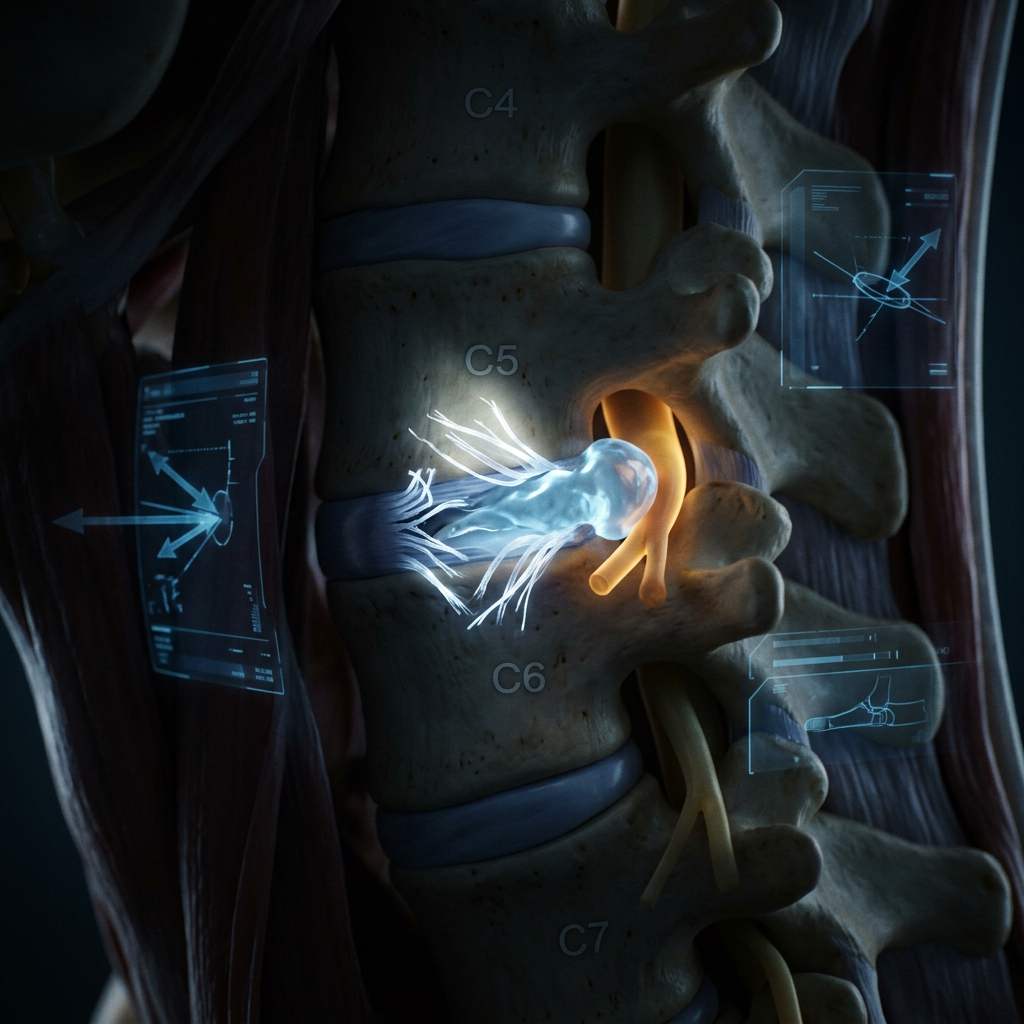
Also known as: Herniated Disc in the Neck, Slipped Disc, Cervical HNP, Bulging Disc Post-Accident A cervical disc injury from an MVA is damage to one of the shock-absorbing discs in the neck, most commonly at C6-7. During a crash, axial loading combined with hyperflexion or hyperextension can tear the annular fibers — the tough outer ring — allowing the softer nucleus to bulge or herniate. When the herniated material contacts a nerve root, arm symptoms develop. One thing worth saying clearly: disc injuries from MVAs frequently don't show symptoms immediately.
They often declare themselves three to fourteen days after the crash, as inflammation peaks and the annular tear becomes mechanically symptomatic. If your symptoms emerged in the days after the accident rather than at the scene, that is consistent with the normal biology of this injury. Deep neck and shoulder blade pain with sharp, electrical pain radiating down the arm — often into the thumb, index, or middle finger — is the classic presentation. Numbness, tingling, or weakness in the arm may follow.
Symptoms worsen with looking up, coughing, sneezing, or prolonged sitting, and the Bakody sign — relief when you rest your hand on top of your head — is a clinically useful indicator. Frontal and rollover crashes are classic mechanisms; rear-end collisions produce disc injury when the head is pre-rotated, as when checking a mirror. Conservative care resolves 60-80% of cervical disc herniations over six to twelve weeks. Manual or mechanical cervical traction decompresses the nerve root.
Flexion-distraction, nerve mobilization, and McKenzie directional exercises centralize symptoms. Deep neck flexor and scapular strengthening restore cervical stability. We coordinate with your PCP, neurologist, and pain management for imaging or epidural steroid injections when indicated, and we document neurologic findings meticulously for your attorney and insurance claim. We may recommend: flexion-distraction/Cox, cervical traction, spinal decompression, McKenzie protocol, Class IV laser, corrective exercise, TENS/e-stim Seek immediate care if: You develop progressive arm or hand weakness, loss of hand dexterity, gait changes, or bladder/bowel dysfunction — these may indicate myelopathy and require emergent evaluation.
How We Can Help
At Gentle Care Chiropractic, we take a multi-disciplinary approach — addressing the root cause of your condition, not just the symptoms.
Chiropractic Adjustments
Precise spinal and joint corrections to restore alignment, relieve nerve pressure, and reduce pain — manual or instrument-assisted based on your needs.
Massage Therapy
Therapeutic massage releases muscle tension, improves circulation to injured tissue, and works synergistically with adjustments for faster recovery.
Physical Rehabilitation
Customized exercise programs strengthen supporting muscles, restore range of motion, and help prevent future flare-ups.
Laser Therapy
Cold laser therapy uses targeted light wavelengths to stimulate cellular healing, reduce inflammation, and relieve deep tissue pain without heat or discomfort.
Electrical Stimulation
E-stim therapy reduces pain and muscle spasm, improves circulation, and supports the healing process — especially effective for acute injuries.
Personalized Care Plan
Every patient is different. We combine these therapies in a plan tailored to your diagnosis, goals, and lifestyle for the best possible outcome.
Ready to Find Relief?
You don't have to live with Cervical Disc Injury / Herniation from MVA. Our team at Gentle Care Chiropractic is here to help you recover and get back to doing what you love.