

Cervical Facet Joint Injury
Expert care for Cervical Facet Joint Injury at Gentle Care Chiropractic in West Linn, Oregon.
Understanding Cervical Facet Joint Injury
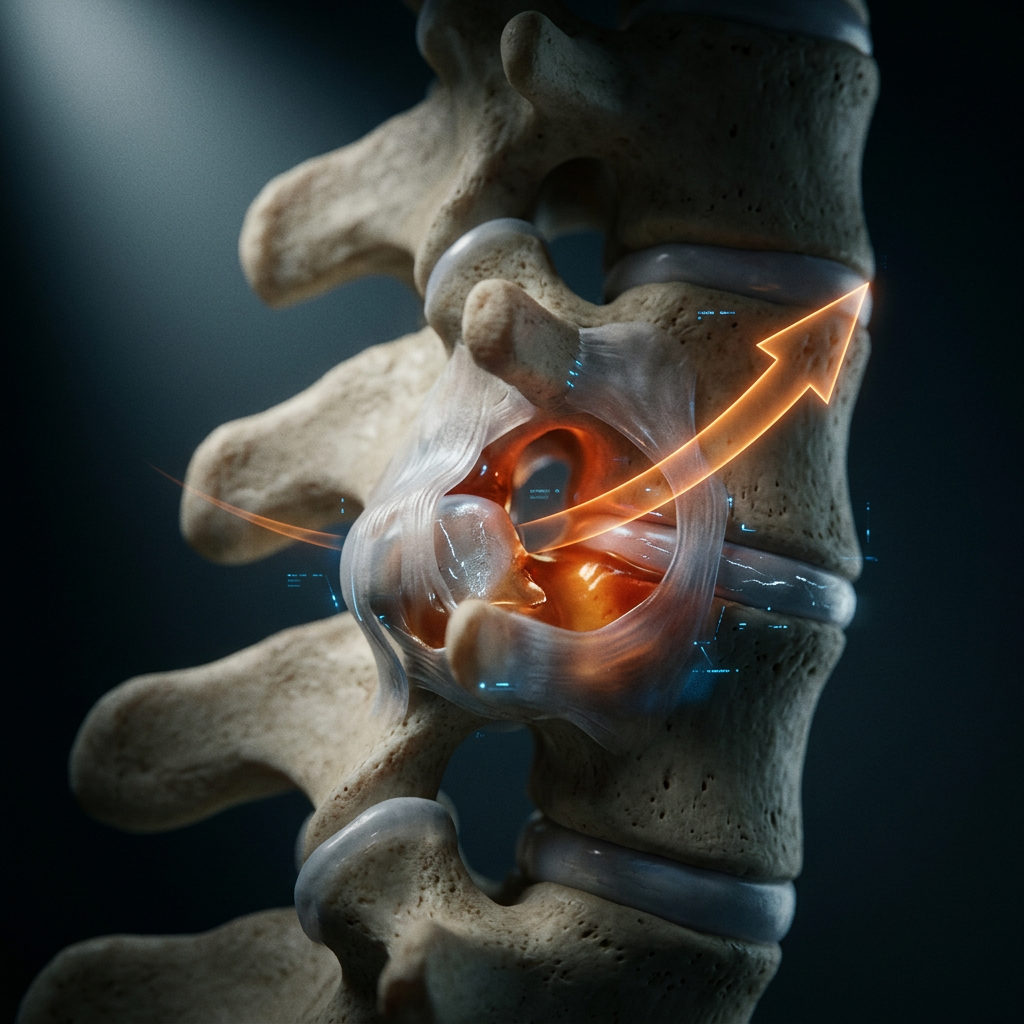
Also known as: Cervical Zygapophyseal Joint Injury, Facet Syndrome, Whiplash Facet Pain Research by Bogduk and Lord — the most rigorous work on post-whiplash pain sources — identifies the cervical facet joints as the primary pain generator in 54-60% of chronic neck pain after MVAs. Despite that, facet injuries are routinely missed because they're largely invisible on standard MRI, which looks at discs and cord much better than it images joints. What I tell patients frequently: "a normal MRI does not mean nothing is wrong with your neck. " The facets are densely innervated by the medial branches of the dorsal rami, which means injury here produces pain that is often disproportionate to what imaging shows.
You'll describe a deep, aching pain on one or both sides of the neck that worsens with looking up or turning toward the painful side. Pain often refers in predictable sclerotomal patterns — into the shoulder blade, upper trapezius, occiput, or base of the skull — without following a true nerve-root dermatome. Morning stiffness is worst and eases with movement. Many patients tell me "my MRI was normal, but something is clearly wrong" — cervical facet injury fits that pattern exactly.
During a rear-end impact, the cervical spine briefly forms an S-shape that causes the inferior articular process of the upper vertebra to impinge on the facet capsule below. The capsules tear, synovial tissue becomes inflamed, and the mechanoreceptors embedded in the capsule are damaged. Frontal and side-impact collisions generate shear forces that overload the facets differently but equally. High-velocity, low-amplitude cervical manipulation has strong evidence for facet-mediated neck pain, and we deliver it with precision after a thorough segmental exam.
Joint mobilization, specific deep neck flexor and scapular stabilization exercises, postural correction, and targeted soft-tissue work complete the protocol. We document segmental restrictions and provocation findings carefully for your case. When symptoms persist beyond eight to twelve weeks despite good conservative care, we refer for medial branch blocks or radiofrequency ablation (RFA), coordinating closely with interventional pain management. We may recommend: diversified adjustments, Activator, cervical mobilization, ART, trigger point therapy, Class IV laser, corrective exercise Seek immediate care if: You develop progressive arm weakness, loss of coordination, bladder or bowel changes, or severe unremitting midline pain — these suggest something beyond a facet injury and require urgent evaluation.
How We Can Help
At Gentle Care Chiropractic, we take a multi-disciplinary approach — addressing the root cause of your condition, not just the symptoms.
Chiropractic Adjustments
Precise spinal and joint corrections to restore alignment, relieve nerve pressure, and reduce pain — manual or instrument-assisted based on your needs.
Massage Therapy
Therapeutic massage releases muscle tension, improves circulation to injured tissue, and works synergistically with adjustments for faster recovery.
Physical Rehabilitation
Customized exercise programs strengthen supporting muscles, restore range of motion, and help prevent future flare-ups.
Laser Therapy
Cold laser therapy uses targeted light wavelengths to stimulate cellular healing, reduce inflammation, and relieve deep tissue pain without heat or discomfort.
Electrical Stimulation
E-stim therapy reduces pain and muscle spasm, improves circulation, and supports the healing process — especially effective for acute injuries.
Personalized Care Plan
Every patient is different. We combine these therapies in a plan tailored to your diagnosis, goals, and lifestyle for the best possible outcome.
Ready to Find Relief?
You don't have to live with Cervical Facet Joint Injury. Our team at Gentle Care Chiropractic is here to help you recover and get back to doing what you love.