

Cervical Radiculopathy post-MVA
Expert care for Cervical Radiculopathy post-MVA at Gentle Care Chiropractic in West Linn, Oregon.
Understanding Cervical Radiculopathy post-MVA
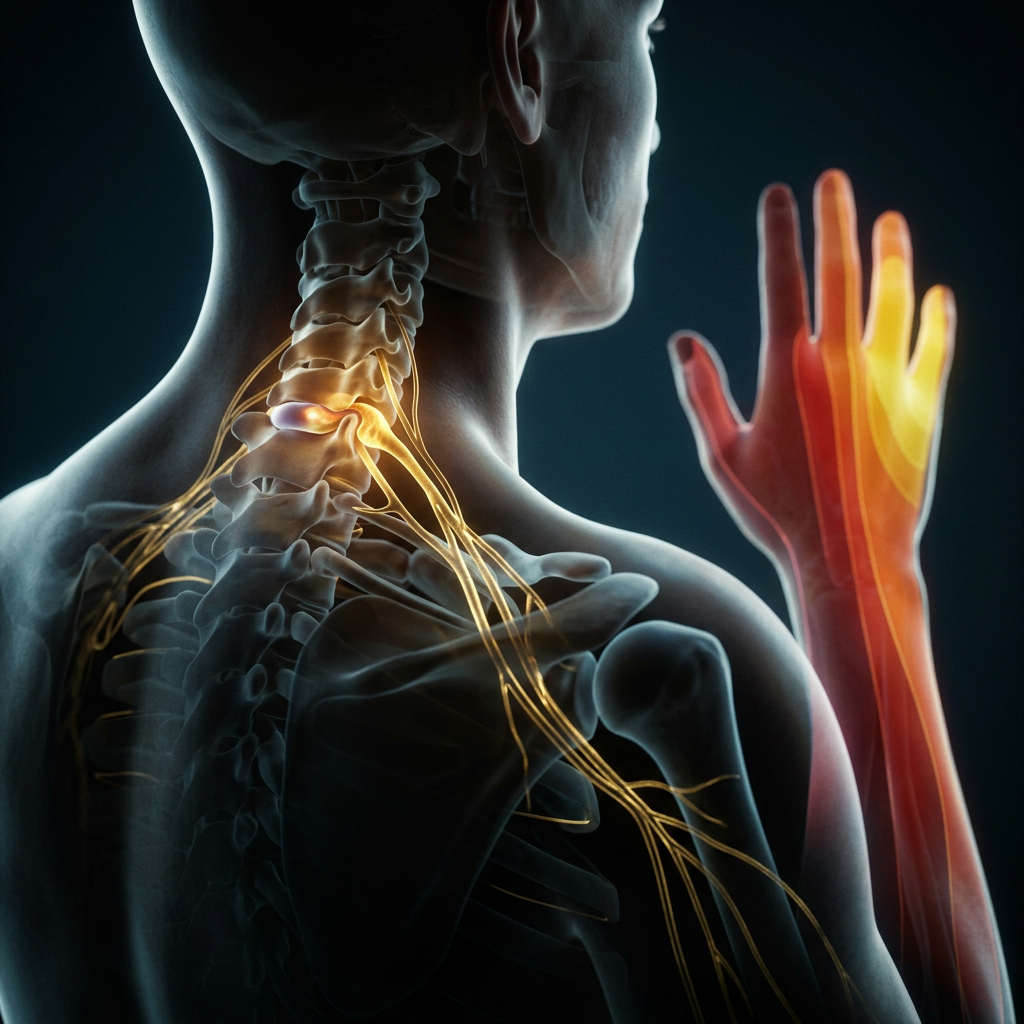
Also known as: Pinched Nerve in the Neck, Cervical Nerve Root Compression, Post-Accident Arm Pain Cervical radiculopathy after an MVA is nerve-root irritation producing pain and neurologic symptoms down the arm, caused by the combination of disc herniation, foraminal swelling, and post-traumatic facet hypertrophy. The specific nerve root involved determines where you feel symptoms — C6 affects the thumb side, C7 the middle finger, C8 the pinky side. Worth noting: even without frank herniation on imaging, edema alone can compress a nerve root after an MVA. And pre-existing but asymptomatic degenerative changes often become fully symptomatic after a crash when added inflammation tips the balance — the crash is the clinically and legally relevant cause of your symptoms.
Sharp, burning, or electrical pain shoots from the neck into the shoulder, down the arm, and into the hand in a stripe-like (dermatomal) pattern. Looking up, turning toward the painful side, or coughing worsens symptoms; the Bakody position often relieves them. Like other disc-related injuries, symptoms may appear days to weeks after the crash. Roughly 75-90% of cervical radiculopathy patients improve with conservative care over four to six months.
Your exam includes Spurling's test, the upper limb tension test, and detailed dermatomal and myotomal mapping — all documented for your case. Treatment combines cervical traction, flexion-distraction, nerve flossing, postural correction, and graduated therapeutic exercise. Class IV laser, electrical stimulation, and soft-tissue therapy support the process. When symptoms are severe or progressive, we coordinate with neurology and pain management for imaging and potential epidural injection.
We may recommend: cervical traction, flexion-distraction/Cox, spinal decompression, McKenzie protocol, Class IV laser, corrective exercise, TENS/e-stim Seek immediate care if: You experience rapidly progressive arm weakness, loss of fine motor control, gait disturbance, or bladder/bowel changes — these raise concern for myelopathy needing urgent surgical evaluation.
How We Can Help
At Gentle Care Chiropractic, we take a multi-disciplinary approach — addressing the root cause of your condition, not just the symptoms.
Chiropractic Adjustments
Precise spinal and joint corrections to restore alignment, relieve nerve pressure, and reduce pain — manual or instrument-assisted based on your needs.
Massage Therapy
Therapeutic massage releases muscle tension, improves circulation to injured tissue, and works synergistically with adjustments for faster recovery.
Physical Rehabilitation
Customized exercise programs strengthen supporting muscles, restore range of motion, and help prevent future flare-ups.
Laser Therapy
Cold laser therapy uses targeted light wavelengths to stimulate cellular healing, reduce inflammation, and relieve deep tissue pain without heat or discomfort.
Electrical Stimulation
E-stim therapy reduces pain and muscle spasm, improves circulation, and supports the healing process — especially effective for acute injuries.
Personalized Care Plan
Every patient is different. We combine these therapies in a plan tailored to your diagnosis, goals, and lifestyle for the best possible outcome.
Ready to Find Relief?
You don't have to live with Cervical Radiculopathy post-MVA. Our team at Gentle Care Chiropractic is here to help you recover and get back to doing what you love.