

Facet Joint Syndrome
Expert care for Facet Joint Syndrome at Gentle Care Chiropractic in West Linn, Oregon.
Understanding Facet Joint Syndrome
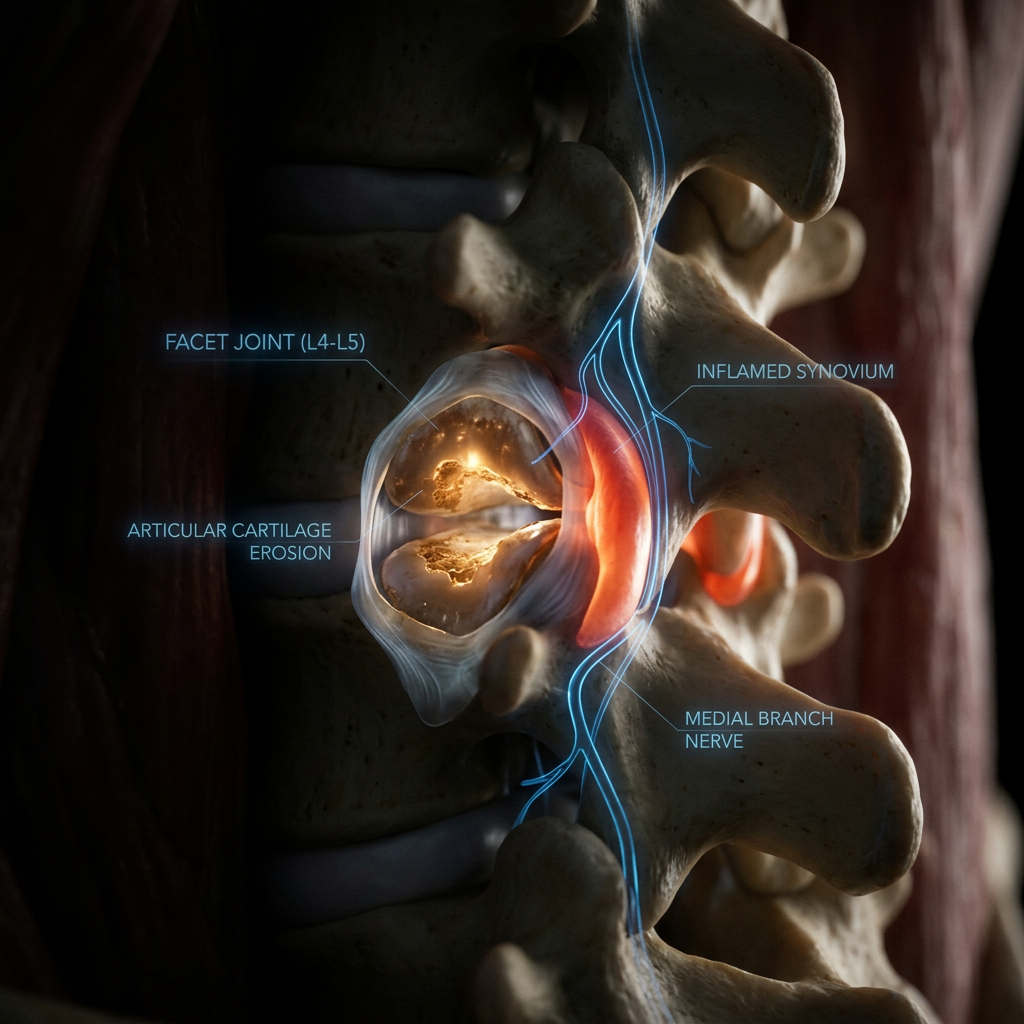
Also known as: Zygapophyseal Joint Pain, Facet Arthropathy, Facet Joint Dysfunction Every spinal segment has two small joints at the back — the facets, or zygapophyseal joints — that guide motion and share load with the disc in front. They're densely innervated, which means when they're irritated, they produce pain that often feels out of proportion to what's happening structurally. Facet joint syndrome is pain arising from these joints, whether from acute inflammation, mechanical locking, or osteoarthritis — and it's a very common source of neck and low back symptoms that responds well to targeted chiropractic care combined with flexion-biased rehabilitation. You may describe a unilateral, deep, dull ache along one side of the spine that sharpens when you arch backward, twist toward the painful side, or rise from a chair after prolonged sitting.
Lumbar facet pain often refers into the buttock and outer thigh in patterns that don't follow a nerve-root distribution — so there's pain down the leg but not the sharp, electric sciatica of a disc herniation. Cervical facet pain frequently refers toward the shoulder blade or the base of the skull. Morning stiffness that loosens with movement, and flares after gardening, golf, or overhead work, are consistent patterns. Repetitive extension and rotation activities, prolonged standing with a swayed lumbar posture, trauma (including whiplash), and age-related osteoarthritis are the leading contributors.
Weak core and gluteal muscles shift load onto the facets. Sudden awkward movements — reaching into the back seat, twisting to lift a suitcase — frequently trigger acute facet flares. Targeted spinal manipulation is highly effective for facet pain — specifically the technique of gapping the joint with an HVLA adjustment often produces immediate relief. We use diversified, Gonstead, or drop-table techniques depending on your presentation.
Soft-tissue work with trigger point therapy, post-isometric relaxation, and myofascial release addresses the tight multifidus and paraspinal muscles that guard the irritated facet. We prescribe flexion-based home exercises — knees-to-chest, cat-cow, pelvic tilts — and core stabilization to offload the joint between visits. Class IV laser and electrical stimulation calm the acute inflammation. Most patients respond within four to eight visits.
We refer for medial branch blocks if conservative care plateaus — that's an injection procedure targeting the nerve that innervates the facet, and it can be useful for cases that don't fully resolve with manual care. We may recommend: diversified adjustments, Gonstead, trigger point therapy, myofascial release, corrective exercise, Class IV laser, TENS/e-stim Seek immediate care if: Your pain is accompanied by progressive weakness, bowel or bladder changes, unexplained fever, night sweats, or follows significant trauma — these warrant prompt medical evaluation.
How We Can Help
At Gentle Care Chiropractic, we take a multi-disciplinary approach — addressing the root cause of your condition, not just the symptoms.
Chiropractic Adjustments
Precise spinal and joint corrections to restore alignment, relieve nerve pressure, and reduce pain — manual or instrument-assisted based on your needs.
Massage Therapy
Therapeutic massage releases muscle tension, improves circulation to injured tissue, and works synergistically with adjustments for faster recovery.
Physical Rehabilitation
Customized exercise programs strengthen supporting muscles, restore range of motion, and help prevent future flare-ups.
Laser Therapy
Cold laser therapy uses targeted light wavelengths to stimulate cellular healing, reduce inflammation, and relieve deep tissue pain without heat or discomfort.
Electrical Stimulation
E-stim therapy reduces pain and muscle spasm, improves circulation, and supports the healing process — especially effective for acute injuries.
Personalized Care Plan
Every patient is different. We combine these therapies in a plan tailored to your diagnosis, goals, and lifestyle for the best possible outcome.
Ready to Find Relief?
You don't have to live with Facet Joint Syndrome. Our team at Gentle Care Chiropractic is here to help you recover and get back to doing what you love.