

Piriformis Syndrome
Expert care for Piriformis Syndrome at Gentle Care Chiropractic in West Linn, Oregon.
Understanding Piriformis Syndrome
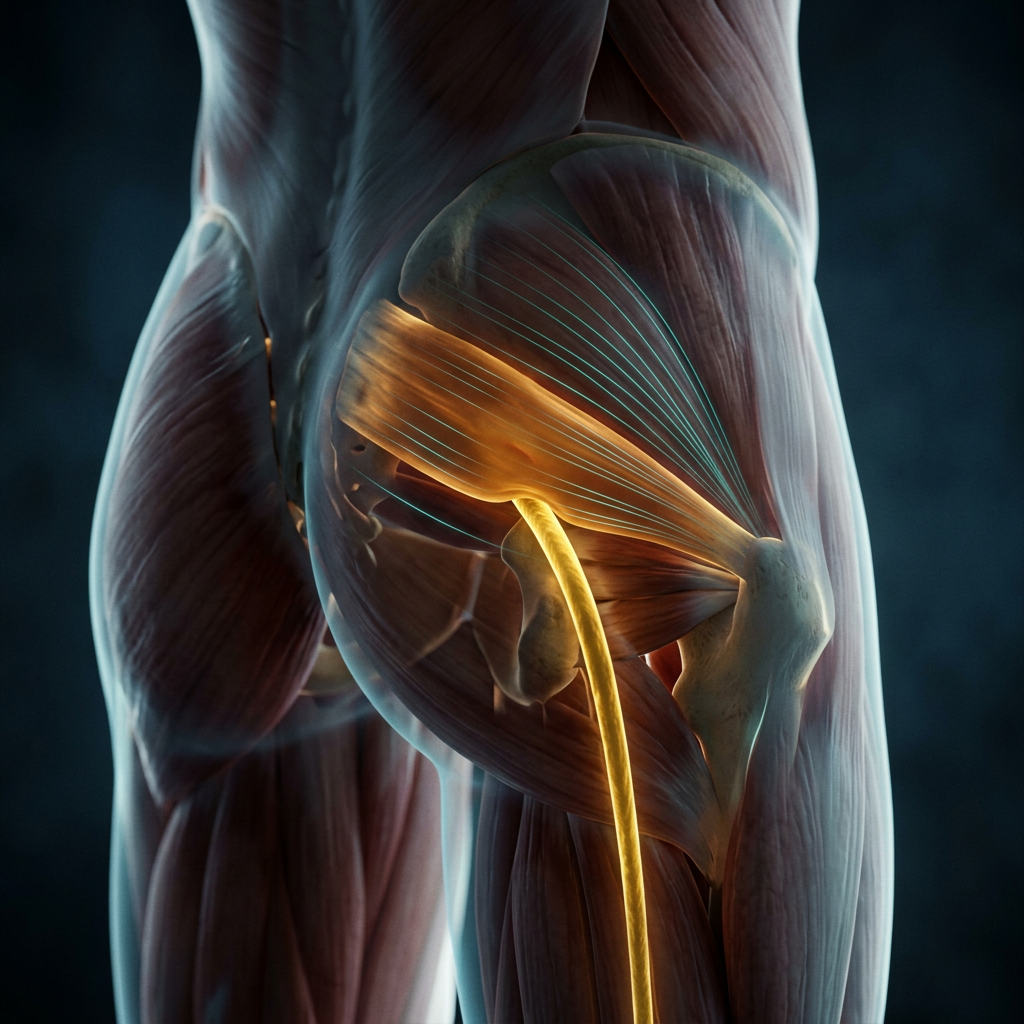
Also known as: Deep Gluteal Syndrome, Piriformis Entrapment The piriformis is a small, deep muscle in the buttock that externally rotates the hip. The sciatic nerve runs directly beneath it — and in roughly 10-15% of people, the nerve actually passes through it. When the piriformis becomes tight, overactive, or in spasm, it can compress or irritate the sciatic nerve and produce a sciatica-like pattern without any disc involvement. The challenge is that piriformis syndrome closely mimics lumbar disc herniation, so careful assessment is essential to distinguish the two — because the treatment differs significantly.
You'll feel deep, aching buttock pain, often pinpointed precisely by pressing into the center of the gluteal region, with pain radiating down the back of the thigh. Crucially, it usually stops at or near the knee — lumbar disc radiculopathy tends to extend further, past the knee to the calf or foot. Prolonged sitting (particularly on hard surfaces or with a wallet in the back pocket, which compresses the piriformis), climbing stairs, driving, and running often worsen symptoms. The FAIR test — flexion, adduction, and internal rotation of the hip — frequently reproduces your pain.
Overuse from running, cycling, or climbing is a common driver, as is prolonged sitting. SI joint dysfunction, leg length discrepancy, and weak gluteal muscles force the piriformis to overwork. Direct trauma, pregnancy-related pelvic changes, and asymmetric hip biomechanics round out the contributors. We target the piriformis directly with Active Release Technique, post-isometric relaxation, trigger point therapy, and instrument-assisted soft-tissue work.
SI joint and hip adjustments restore proper pelvic mechanics so the piriformis stops compensating for dysfunction above or below it. Specific stretching in the FAIR position and neural mobilization improve mobility. Rehabilitation focuses on gluteus medius and maximus activation — clamshells, bridges, lateral band walks — so you stop over-recruiting the piriformis to do the work those larger muscles should be doing. Class IV laser is a useful adjunct.
Most piriformis cases resolve within four to eight weeks with consistent care and a disciplined home program. We may recommend: ART, myofascial release, Graston/IASTM, dry needling, diversified adjustments, corrective exercise, Class IV laser Seek immediate care if: You develop progressive leg weakness, loss of bowel or bladder control, saddle numbness, or pain that clearly extends below the knee in a dermatomal pattern — these may indicate a lumbar disc or nerve root problem requiring further workup.
How We Can Help
At Gentle Care Chiropractic, we take a multi-disciplinary approach — addressing the root cause of your condition, not just the symptoms.
Chiropractic Adjustments
Precise spinal and joint corrections to restore alignment, relieve nerve pressure, and reduce pain — manual or instrument-assisted based on your needs.
Massage Therapy
Therapeutic massage releases muscle tension, improves circulation to injured tissue, and works synergistically with adjustments for faster recovery.
Physical Rehabilitation
Customized exercise programs strengthen supporting muscles, restore range of motion, and help prevent future flare-ups.
Laser Therapy
Cold laser therapy uses targeted light wavelengths to stimulate cellular healing, reduce inflammation, and relieve deep tissue pain without heat or discomfort.
Electrical Stimulation
E-stim therapy reduces pain and muscle spasm, improves circulation, and supports the healing process — especially effective for acute injuries.
Personalized Care Plan
Every patient is different. We combine these therapies in a plan tailored to your diagnosis, goals, and lifestyle for the best possible outcome.
Ready to Find Relief?
You don't have to live with Piriformis Syndrome. Our team at Gentle Care Chiropractic is here to help you recover and get back to doing what you love.