

Sacroiliac (SI) Joint Injury from MVA
Expert care for Sacroiliac (SI) Joint Injury from MVA at Gentle Care Chiropractic in West Linn, Oregon.
Understanding Sacroiliac (SI) Joint Injury from MVA
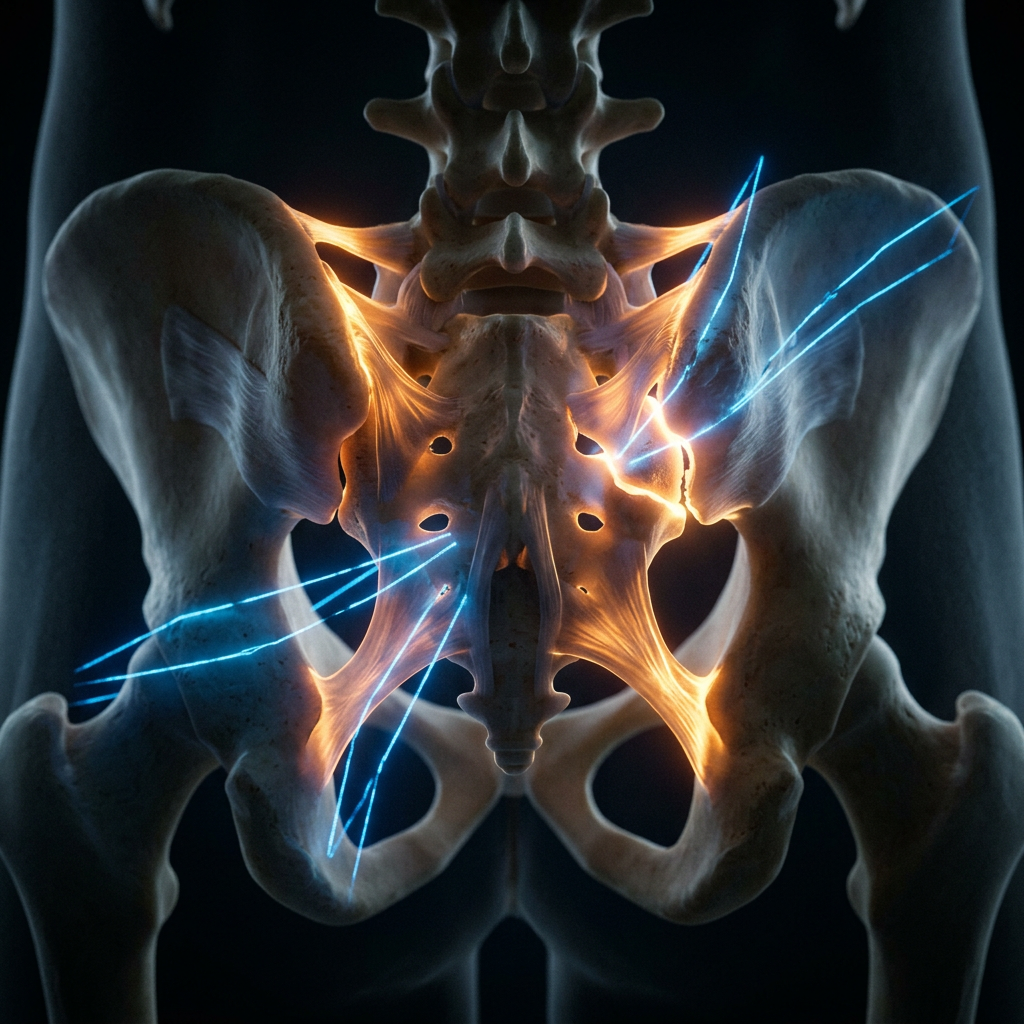
Also known as: SI Joint Dysfunction, SI Sprain, Sacroiliitis, Pelvic Joint Injury from Car Accident The sacroiliac joints are among the most under-recognized sources of post-MVA pain. They connect the base of the spine to the pelvis, transmit enormous loads between spine and legs, and are stabilized by some of the body's strongest ligaments — but those ligaments can still be injured in a crash. The classic "Fortin finger" sign — where a patient points with one finger to a spot just below the belt line and off to one side — is one of the most specific physical findings in all of lumbar diagnosis. Pain at that single, precise location, worsening with standing on one leg, climbing stairs, getting out of a car, or rolling over in bed, is the hallmark.
If your foot was on the brake pedal at impact, force transmitted up through the leg into the SI joint. In side-impact crashes, direct lateral force drives the pelvis asymmetrically. Knee-into-dashboard impacts send axial force up through the femur into the acetabulum and onward into the SI joint. Diagnosis uses the Laslett cluster of provocation tests — distraction, thigh thrust, compression, Gaenslen's, sacral thrust — which is the most evidence-based approach.
Treatment includes specific SI manipulation or mobilization, soft-tissue therapy to the glutes and thoracolumbar fascia, glute activation and pelvic stabilization exercises, and an SI support belt during the acute phase. Motor control retraining of the deep stabilizers builds long-term stability. We coordinate with pain management for SI joint injections when symptoms are refractory. Most SI injuries resolve over four to eight weeks.
We may recommend: diversified adjustments, Activator, myofascial release, ART, Class IV laser, corrective exercise, DNS Seek immediate care if: You develop bowel or bladder changes, saddle numbness, fever with back pain, or rapidly progressive leg weakness — these point to causes beyond SI dysfunction requiring urgent evaluation.
How We Can Help
At Gentle Care Chiropractic, we take a multi-disciplinary approach — addressing the root cause of your condition, not just the symptoms.
Chiropractic Adjustments
Precise spinal and joint corrections to restore alignment, relieve nerve pressure, and reduce pain — manual or instrument-assisted based on your needs.
Massage Therapy
Therapeutic massage releases muscle tension, improves circulation to injured tissue, and works synergistically with adjustments for faster recovery.
Physical Rehabilitation
Customized exercise programs strengthen supporting muscles, restore range of motion, and help prevent future flare-ups.
Laser Therapy
Cold laser therapy uses targeted light wavelengths to stimulate cellular healing, reduce inflammation, and relieve deep tissue pain without heat or discomfort.
Electrical Stimulation
E-stim therapy reduces pain and muscle spasm, improves circulation, and supports the healing process — especially effective for acute injuries.
Personalized Care Plan
Every patient is different. We combine these therapies in a plan tailored to your diagnosis, goals, and lifestyle for the best possible outcome.
Ready to Find Relief?
You don't have to live with Sacroiliac (SI) Joint Injury from MVA. Our team at Gentle Care Chiropractic is here to help you recover and get back to doing what you love.