

Scoliosis
Expert care for Scoliosis at Gentle Care Chiropractic in West Linn, Oregon.
Understanding Scoliosis
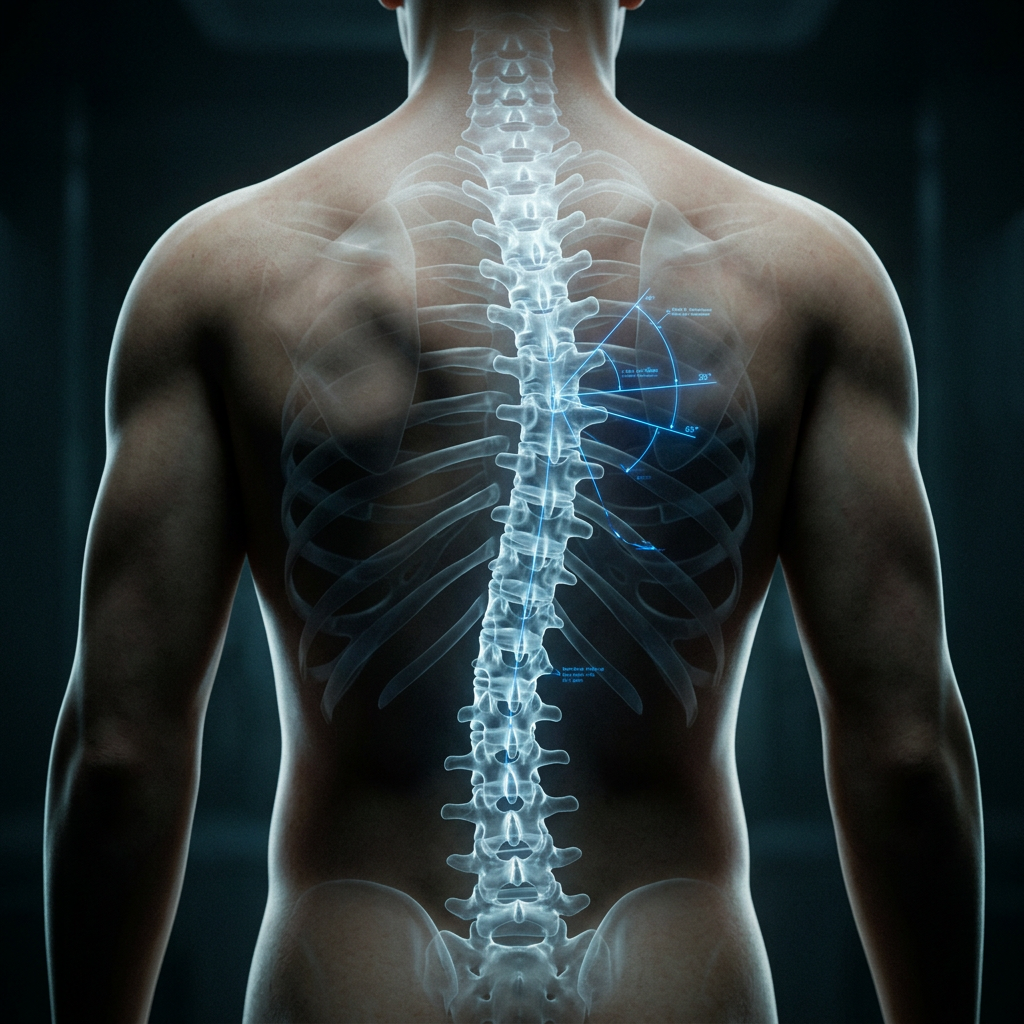
Also known as: Idiopathic Scoliosis, Adolescent Scoliosis, Adult Scoliosis, Spinal Curvature Scoliosis is a three-dimensional curvature of the spine — not simply a lean to one side, but a rotation of the vertebrae combined with lateral curvature that forms a C-shape or S-shape when viewed from behind. The most common form, adolescent idiopathic scoliosis, develops during growth spurts without a clearly identified cause (idiopathic meaning "we don't know why yet"). Adult scoliosis is either long-standing from adolescence or develops later due to degenerative changes. The curve is measured by Cobb angle: curves under 20 degrees are typically monitored, 20 to 40 degrees often benefit from bracing or specialized exercise, and curves over 40 to 50 degrees warrant surgical evaluation.
Many adolescents with scoliosis are completely pain-free; their parents notice uneven shoulder or hip height, a shoulder blade that protrudes more on one side, or a visible rib hump when bending forward (the Adam's test). Adults with scoliosis more commonly report muscle fatigue, back stiffness after long standing, and occasional radicular pain if the curve narrows nerve exits. In severe thoracic curves, breathing can be affected. Most cases are idiopathic, with genetic predisposition playing a meaningful role.
Congenital vertebral anomalies, neuromuscular conditions, and degenerative disc changes account for a smaller percentage. The critical monitoring window is during skeletal immaturity — growth spurts in adolescence are when curves tend to progress most rapidly. Chiropractic care for scoliosis centers on improving spinal mobility, reducing pain, and supporting posture — not straightening the curve, which is an honest and important distinction to make. We use chiropractic-specific scoliosis protocols (CBP, CLEAR, Pettibon) alongside gentle mobilization of stiff segments.
Schroth-informed exercises train elongation, de-rotation, and breathing into the concave side of the curve — these require learning and consistency but produce real results over time. Soft-tissue work addresses the asymmetric muscle tension that scoliosis creates. We monitor with scoliometer and periodic imaging when appropriate. Custom orthotics may be helpful where leg length asymmetry contributes.
We co-manage closely with orthopedic specialists for curves greater than 40 degrees or rapid progression. We may recommend: diversified adjustments, Activator, myofascial release, corrective exercise, posture program, orthotics, kinesio taping Seek immediate care if: The curve rapidly progresses, you develop new neurological symptoms, breathing difficulty, or pain that wakes you at night — these warrant prompt orthopedic evaluation.
How We Can Help
At Gentle Care Chiropractic, we take a multi-disciplinary approach — addressing the root cause of your condition, not just the symptoms.
Chiropractic Adjustments
Precise spinal and joint corrections to restore alignment, relieve nerve pressure, and reduce pain — manual or instrument-assisted based on your needs.
Massage Therapy
Therapeutic massage releases muscle tension, improves circulation to injured tissue, and works synergistically with adjustments for faster recovery.
Physical Rehabilitation
Customized exercise programs strengthen supporting muscles, restore range of motion, and help prevent future flare-ups.
Laser Therapy
Cold laser therapy uses targeted light wavelengths to stimulate cellular healing, reduce inflammation, and relieve deep tissue pain without heat or discomfort.
Electrical Stimulation
E-stim therapy reduces pain and muscle spasm, improves circulation, and supports the healing process — especially effective for acute injuries.
Personalized Care Plan
Every patient is different. We combine these therapies in a plan tailored to your diagnosis, goals, and lifestyle for the best possible outcome.
Ready to Find Relief?
You don't have to live with Scoliosis. Our team at Gentle Care Chiropractic is here to help you recover and get back to doing what you love.